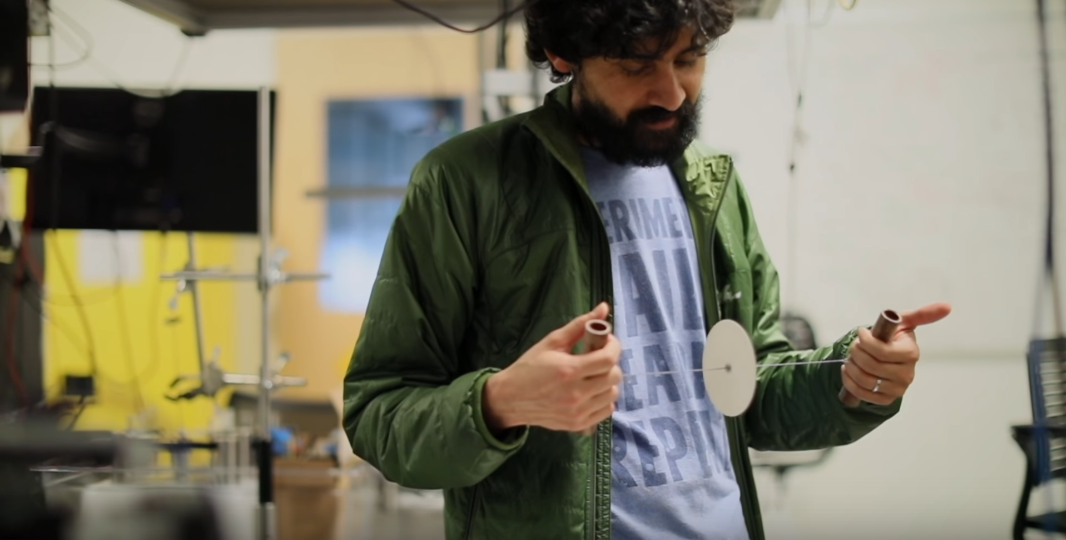
Inspired by a toy, Stanford bioengineers have developed an inexpensive, human-powered blood centrifuge that will enable precise diagnosis and treatment of diseases like malaria, African sleeping sickness and tuberculosis in the poor, off-the-grid regions where these diseases are most prevalent.
Manu Prakashスタンフォード大学(生物工学)助教授とSaad Bhamla(論文の再著の著者であり、ポスドク研究員)は、回転するおもちゃからインスピレーションを得て、マラリア、結核などの病気の精密な診断と治療を可能にする、安くて電気を使わず人力で動く血液遠心分離機「Paperfuge」を開発したそうです。
Prakash, who specializes in low-cost diagnostic tools for underserved regions, recognized the need for a new type of centrifuge after he saw an expensive centrifuge being used as a doorstop in a rural clinic in Uganda because there was no electricity to run it.